Practical guide · 3 min
The measurements behind a Bund strap.
What to record about your watch, wrist and existing strap before discussing a Bund: attachment width, proportions and length.
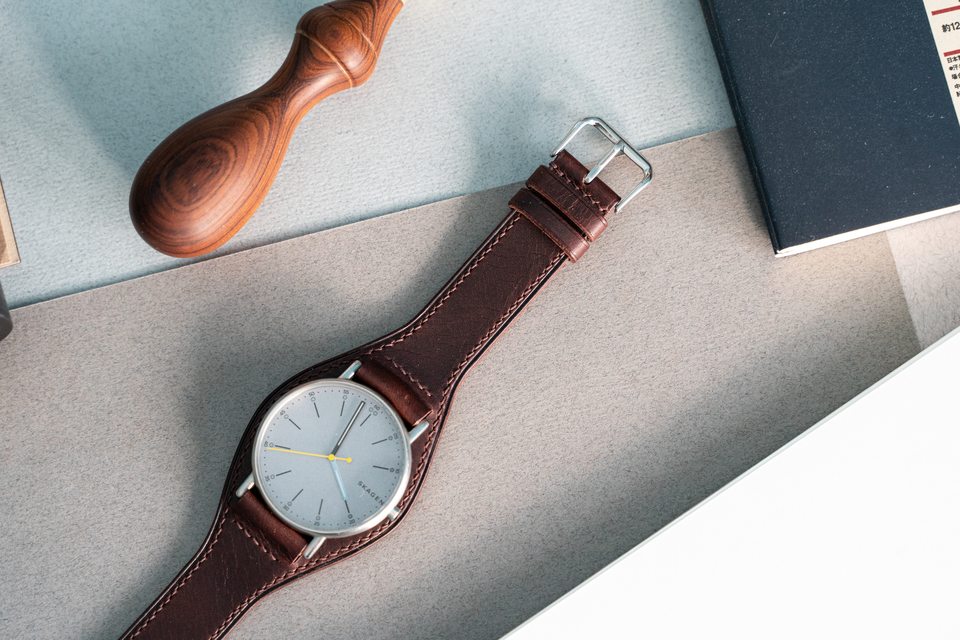
Identify the watch first
Start with the exact watch reference, if you have it. Add a clear front photograph and a view of the case and lugs from the side. A model family name or a photograph of a similar watch leaves room for confusion. Keep the manufacturer's published dimensions with your notes, and label any measurements you take yourself.
The archive is useful for choosing a shape, but the watch in a photograph is not a sizing template. Perspective changes apparent widths, and the edge of the leather may sit partly in shadow. Avoid working out a strap size by comparing pixels in a product image.
Confirm the attachment width
Attachment width is measured where the strap meets the watch, between the lugs. It is separate from the case diameter and from the widest part of a Bund pad. Confirm the figure for your exact watch. A correctly fitted existing strap can also provide a useful measurement at its attachment.
HIRSCH's illustrated size guide distinguishes attachment width from buckle width. It is a useful reference for those measurement positions. Its length categories belong to HIRSCH straps, however; they are not a sizing chart for the archive pieces shown here.
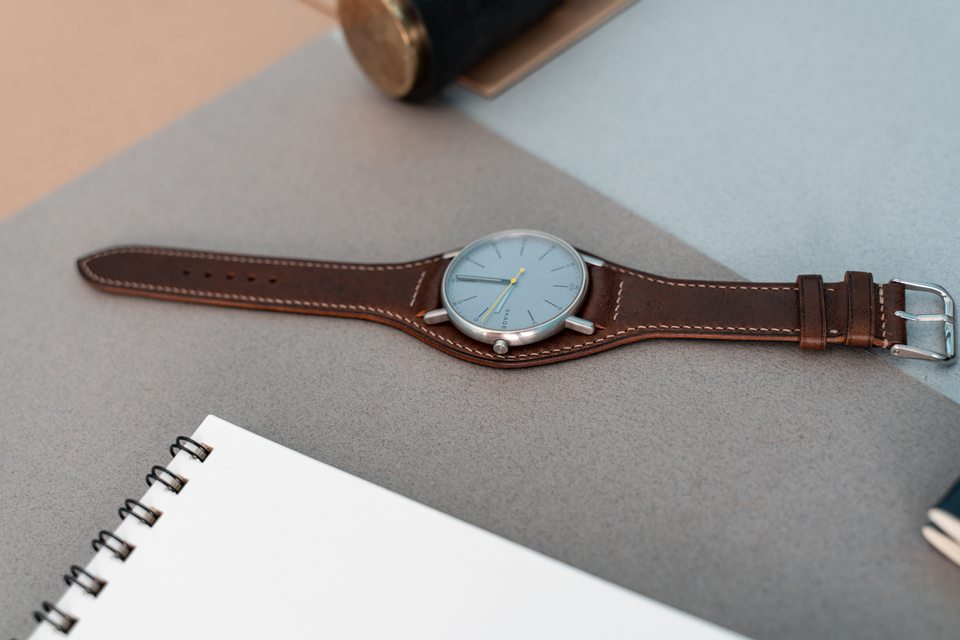
Record the wrist and the fit you use
Measure your wrist where you normally wear the watch, using a flexible tape held flat without pulling it tight. Write down the circumference and the unit. If you use a strip of paper, mark the overlap and measure the marked length against a ruler.
An existing strap gives useful context. Note which hole you use, where the buckle sits, how much tail remains and whether the fit feels too loose or too tight. Describe these observations alongside the measurement. A wrist circumference alone does not show how you prefer the watch to sit.
Discuss the pad as its own shape
Choose an archive example for the amount of leather visible around the case. Explain whether you like its narrow border, its curved shoulders or its long taper. This is more specific than asking for a strap to look slim, which can mean width, thickness or the overall impression on the wrist.
Ask which pad dimensions and case measurements are needed for the proposed design. If you supply a sketch, label the direction of every measurement. Keep the widest point of the pad distinct from its length along the strap. A photograph with the dimensions marked is easier to interpret than an unlabelled list of numbers.
Put the information in one note
Bring the following together before discussing a new strap. The aim is a clear description of your watch and your preferences; the final specification should follow the instructions for the actual design you choose.
- Watch brand and exact reference, with front and side photographs.
- Confirmed attachment width and the source of that measurement.
- Wrist circumference, measurement unit and preferred wearing position.
- A note about the fit and buckle position of your current strap.
- An archive example showing the pad proportions you like.