Photo journal · 2 min
Three colours, one outline.
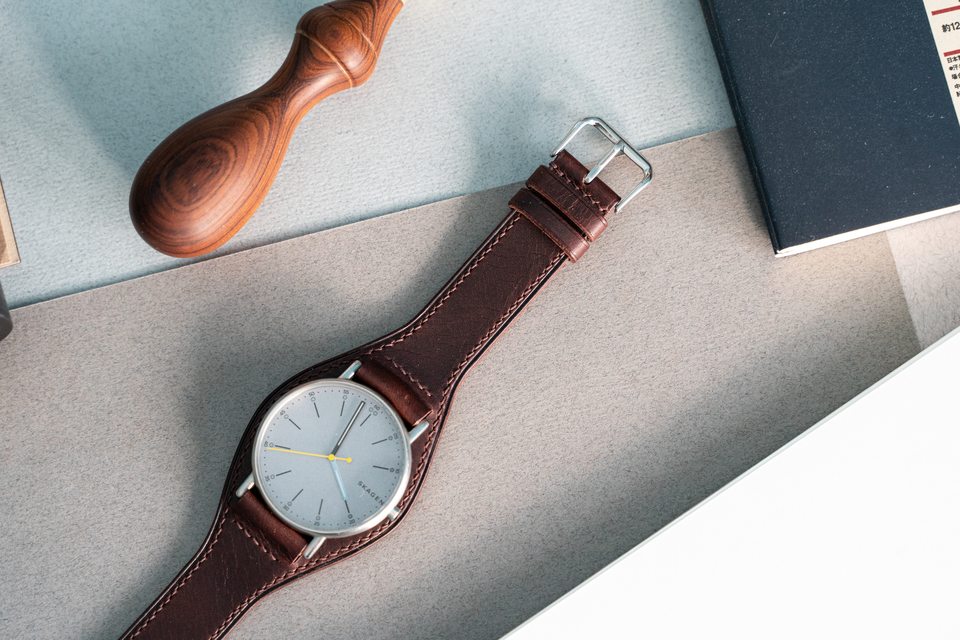
Cognac, dark brown and red archive pieces share a curved Bund outline. Comparing the full views makes the differences easier to see.
Keep the shape in view
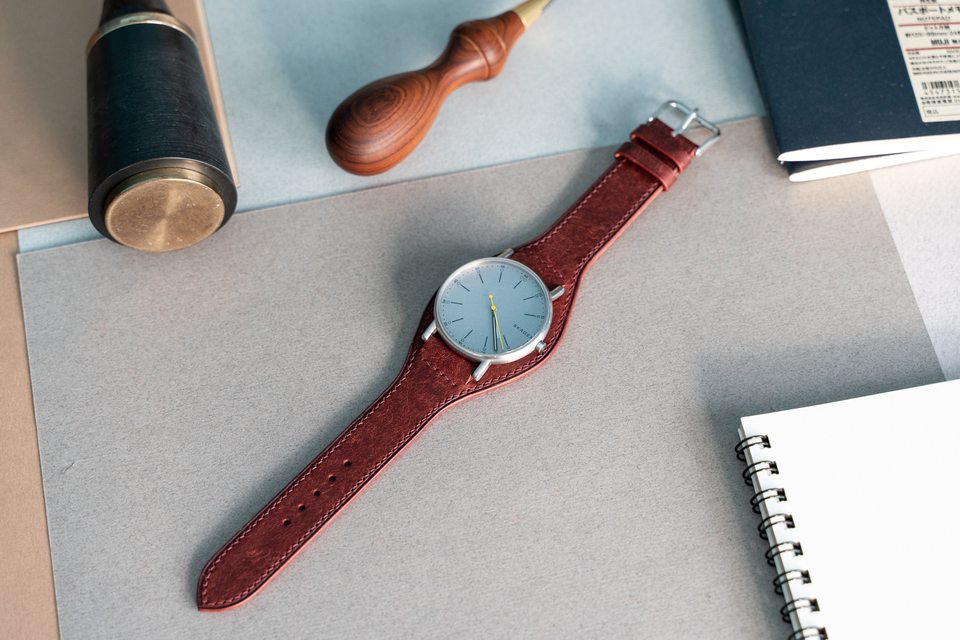
These three archive works share a recognisable outline: a shaped centre beneath a round case, curved shoulders and a narrow length of strap on either side. Each is photographed with a pale dial and a bright metal case. That gives us a useful visual reference while looking at the leather around it.
The photographs do not establish identical dimensions, and their angles differ. What they do show is the same broad design idea in cognac, dark brown and red. Compare the full pieces first, keeping the cases at a similar size on screen.
Three different emphases
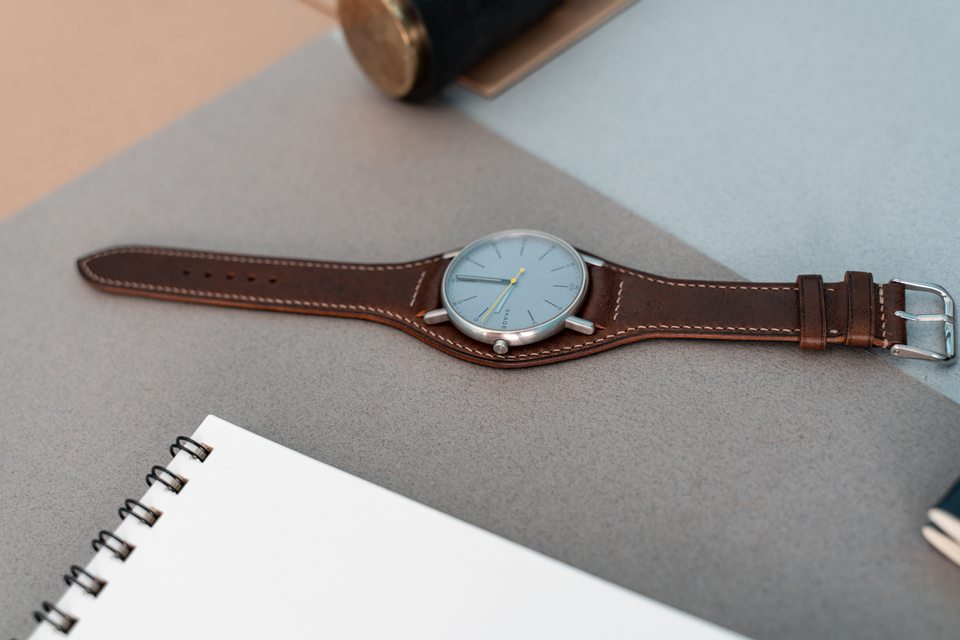
On the cognac piece, the pale stitching is prominent against the warm brown leather. It makes the outer curve easy to follow. The dark-brown example has a quieter stitch line, while the pale dial stands strongly against the surrounding leather.
The red piece brings more colour into the same general shape. In its full view, you can follow the red surface from the pointed end, around the case and towards the buckle. Small variations in the photographed surface remain visible across those areas. They are details of this piece, not a prediction of how another strap will age.
Compare the complete combination
It is tempting to choose from a close crop of leather alone. Return to the full watch before deciding. Look at the amount of colour beside the case, the visibility of the stitching and the relationship between the strap and the dial. Then open the detail views to inspect the finish.
You may prefer the outline of all three and the colour relationship of only one. That is a useful result: save the relevant work and explain which part of it matters. These archive pieces are references for that conversation. Check Asketica for current information before treating a photographed colour or execution as an available option.